
An ounce of information
Article by Pnut King
Published on 11/09/2026 in Crop News
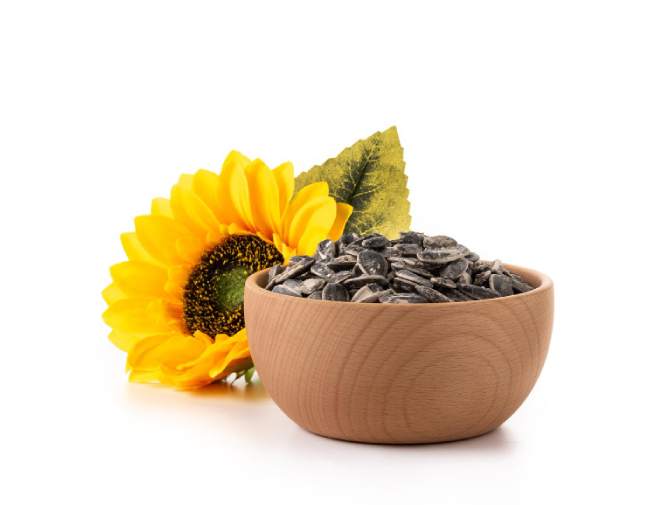
Due to their natural oil, protein, and energy content, sunflower seeds are frequently utilised in wild bird food. However, deciding between whole sunflower seeds and sunflower hearts entails more than just nutritional value for producers of commercial bird feed. The selection is influenced by a number of factors, including product pricing, processing needs, storage conditions, consumer preferences, and manufacturing efficiency.
Although both products are derived from the same crop, their functions in bird feed formulas differ. Whole sunflower seeds keep their natural husk, whereas sunflower hearts have their outer shells removed.
Which choice is therefore preferable for the manufacturing of commercial bird feed? The product being produced and the market it serves will determine the response.
The first step in choosing the appropriate ingredient is to understand the differences.
Sunflower kernels with the outer husk removed are called sunflower hearts. They are frequently utilised in high-quality bird food, no-mess seed mixes, and items made for smaller garden birds since they include the edible portion of the seed.
Sunflower seeds that are whole keep their outer shells. They come in a variety of forms, such as striped sunflower seeds and black oil sunflower seeds. Because of their comparatively high oil content and appropriateness for bird food, black oil types are frequently prized.
The primary difference for manufacturers is whether or not the hull is there. This has an impact on the end product's qualities, handling, waste, and useable edible content.
When evaluated on an edible-kernel basis, sunflower hearts and entire sunflower seeds have comparable nutrition since birds eat the heart portion of the seed.
Sunflower kernels are prized for their energy, protein, and natural oils. Depending on the variety, growing environment, and processing, their nutritional makeup can change.
The key distinction is that whole sunflower seeds also include the outer shell, which provides fibre but is not eaten by all bird species.
Because sunflower hearts are made of edible kernels without the extra shell material, manufacturers of energy-rich bird food may favour them.
Instead than depending just on broad nutritional statements, buyers should ask for a product specification or laboratory analysis to compare crude protein, crude fat, crude fibre, and moisture.
The decision between the two products may be influenced by processing needs.
Without dehulling, whole sunflower seeds can be used to bird feed mixtures. This could cut down on the extra processing needed before packing and blending.
Before sunflower hearts are delivered to the manufacturer, they must be dehulled. The technique of dehulling adds an additional processing step to the supply chain by separating the edible kernel from the outer shell.
Important factors for commercial buyers are as follows:
Additionally, producers should specify if they require sunflower chips, broken hearts, or complete hearts. These formats might work well with various feed compositions.
Birds do not leave the same buildup of empty sunflower husks under feeders since the outer shell has already been removed. Because of this, hearts are appealing for high-end retail bird food and goods intended for more hygienic feeding locations.
However, when birds eat the kernels, whole sunflower seeds leave behind husks. This may be acceptable to some customers, especially if they are buying conventional or value-oriented bird feed.
This gives producers the chance to establish a variety of product lines:
Instead of presuming that a single product will work for every consumer, the selection should take into account the expectations of the target market.
Another crucial consideration when buying sunflower products in large quantities is storage.
The outer shells of whole sunflower seeds are retained, giving the kernels some degree of physical protection. Due to their exposed surfaces, dehulled sunflower hearts need to be carefully protected from moisture and improper storage conditions.
Manufacturers ought to focus on:
Before placing significant orders, buyers should confirm the supplier's packaging standards and ask for storage recommendations.
Compared to sunflower hearts, whole sunflower seeds might be less expensive per tonne.
However, relying just on the reported price to compare the two products can lead to an incorrect purchase decision.
Although it adds weight to whole sunflower seeds, the outer shell does not have the same culinary value as the kernel.
When buying entire seeds, for instance, a maker should think about the edible kernel yield, the intended use of the product, and whether shell removal is required.
Sunflower variety, supplier requirements, and processing effectiveness will determine the real difference. Instead of assuming a set hull %, buyers should use measured kernel-yield data.
The manufacturer's target market, formulation, and production needs all influence the best option.
| Purchasing requirement | Better-suited option |
|---|---|
| Premium no-mess bird food | Sunflower hearts |
| Conventional whole-seed mixes | Whole sunflower seeds |
| Products requiring ready-to-use kernels | Sunflower hearts |
| Formulations where shells are acceptable | Whole sunflower seeds |
| Products targeting a broad range of small garden birds | Sunflower hearts |
| Buyers prioritising lower initial purchase cost | Compare both on usable kernel cost |
Sunflower hearts can benefit firms who provide high-end European bird food markets by reducing feeding waste and improving product convenience.
For producers of traditional seed mixes and goods where the hull is acceptable, whole sunflower seeds are still a viable choice.
Manufacturers should compare suppliers to explicit purchasing standards prior to confirming a commercial order.
Crucial inspections consist of:
Before a buyer commits to a large-volume purchase, a supplier should be able to deliver precise specifications and pertinent quality documents.
Both whole sunflower seeds and sunflower hearts are used in the production of commercial wild bird feed. While whole seeds provide a useful alternative for traditional seed mixes, hearts are especially well-suited for high-quality, shell-free bird food.
Nutritional requirements, edible kernel yield, processing needs, storage, client preferences, and total landed cost should all be taken into account when making purchases for manufacturers.
Bird feed companies can choose the best sunflower component, maintain consistent product quality, and create dependable bulk sourcing agreements by comparing these criteria.
Because their shells have been removed, sunflower hearts are frequently chosen for high-quality, mess-free bird food.Whole seeds can still be used in traditional bird feed recipes.
Their nutritional content is essentially the same when it comes to edible kernels. The nutritional content per tonne of purchased product varies since whole seeds have more outer shell material.
They reduce the quantity of husk that is thrown away after feeding and offer ready-to-use edible kernels that work well in shell-free mixes.
Indeed. Due to its oil content and suitability for many seed-eating birds, black sunflower seeds are frequently used in bird feed.
Product kind, moisture content, cleanliness, nutritional analysis, kernel yield, packaging, supplier capacity, and export documentation should all be examined by buyers.

With over 17 years of experience in the peanut industry and numerous awards recognising his contributions, he founded Agrocrops in 2008, a leading global peanut company. His passion for peanuts drives his commitment to improving the industry for all stakeholders and promoting sustainability.
Share this


Published on 11/12/2026 in
Published on 19/10/2026 in
Published on 16/10/2026 in
Published on 14/10/2026 in