
An ounce of information
Article by Pnut King
Published on 26/08/2026 in Peanut News
Aflatoxin ranks among the top food-safety concerns in the peanut import trade. A shipment can pass a visual check on arrival and still fail laboratory testing, turning up contamination that rules it out for the intended market. Importers who wait until the container reaches port to think about this risk are already behind. The work starts earlier, in supplier selection and crop conditions, and carries through sampling, testing, storage, and transportation.
Aflatoxins are toxins produced by certain Molds, including Aspergillus flavus, Aspergillus nomius, and Aspergillus parasiticus. Peanuts are exposed to this risk at several points: cultivation, harvesting, drying, storage, and transportation. Importers who put the right controls in place before booking a shipment can cut that risk substantially.
Aflatoxin is a type of mycotoxin that forms when susceptible crops sit in conditions that support mold growth. The tricky part is that it gives no visual warning: kernels can look completely normal and still carry contamination that only shows up under laboratory testing.
For an importer, receiving non-compliant peanuts carries real consequences. A shipment may face rejection, additional testing, customs delays, financial losses, or problems with a customer. Aflatoxin control is therefore both a food-safety responsibility and a commercial one.
Supplier selection is one of the first places an importer can reduce aflatoxin risk.
Price shouldn't be the only factor in choosing an exporter. Buyers should also look at the company's experience, processing facilities, quality-control procedures, testing practices, export history, certifications, and ability to provide consistent documentation.
Ask suppliers directly how they manage aflatoxin, from raw peanut procurement through processing and shipment. A supplier who can walk through their quality-control process in detail is far easier to evaluate than one who simply hands over a certificate after the order has already been placed.
Export history also provides useful context, particularly when a supplier has a track record serving markets with strict food-safety requirements.
Aflatoxin limits belong in the agreement before the purchase is finalized, not as an afterthought once the shipment has already been dispatched.
The applicable limit depends on the destination country, product category, and intended use. Under the EU contaminant regulation referenced in the source material, peanuts intended for sorting or other physical treatment carry maximum levels of 8 µg/kg for aflatoxin B1 and 15 µg/kg for total aflatoxins. Peanuts placed on the market for direct consumption or use as an ingredient carry lower limits of 2 µg/kg for B1 and 4 µg/kg for total aflatoxins.
The United States works differently. USDA standards for imported raw peanuts intended for human consumption require each lot to be sampled, tested, and certified, with total aflatoxin at 15 ppb or less. Because these requirements vary between markets, importers should confirm the rules that apply to their specific product and destination.
A Certificate of Analysis can provide useful evidence, but buyers should check whether it actually represents the lot being purchased.
A report from an older shipment doesn't necessarily reflect the quality of a new batch. A useful laboratory report identifies the product, lot or batch, testing date, laboratory, and aflatoxin results.
For larger purchases or new suppliers, buyers may also want independent pre-shipment testing rather than relying entirely on supplier-provided documentation. The objective is straightforward: verify the actual shipment instead of assuming previous results will apply to every lot.
Testing is only as reliable as the sample it's based on.
Aflatoxin contamination doesn't spread evenly through a shipment, so a poorly selected sample can produce a misleading result. Commercial quantities should be sampled using an appropriate procedure, particularly when the shipment carries significant financial or food-safety risk.
For higher-risk purchases, importers can work with qualified inspection companies or laboratories experienced in mycotoxin testing.
Laboratory results should be compared against both the contractual specification and the legal requirement for the destination market. Testing doesn't replace good handling practices, but it gives buyers an important checkpoint before the product enters their supply chain.
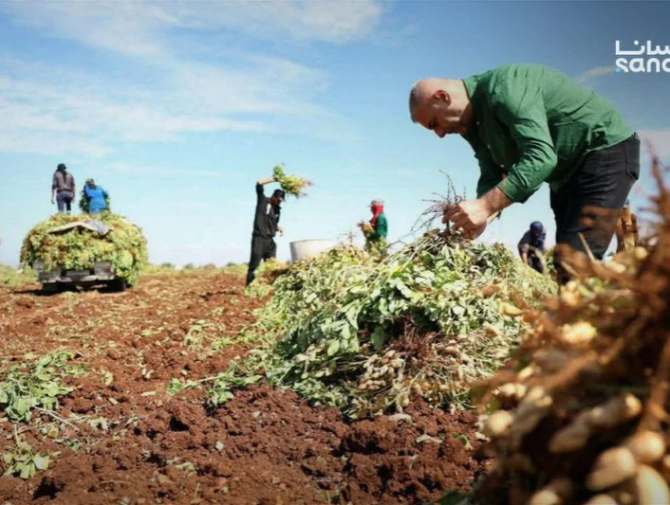
Aflatoxin risk often begins in the field.
Drought, excessive rainfall, high temperatures, and other agricultural stresses can weaken peanut quality and leave crops more vulnerable to contamination. Poor drying conditions after harvest add another layer of risk on top of that.
Importers do well to monitor crop conditions, since a difficult season may call for additional supplier verification and shipment-level testing.
Post-harvest handling is another important part of aflatoxin control.
Peanuts need to be dried properly and stored under suitable conditions. Excess moisture, poor ventilation, and unsuitable warehouses create exactly the conditions mold needs to take hold.
When evaluating a supplier, buyers should ask about:
None of these measures can guarantee an aflatoxin-free shipment on their own, but together they form an important set of preventive controls that reduce avoidable risk.
Visual inspection can't confirm aflatoxin levels, but it can identify other quality concerns.
Buyers or inspection companies can look for damaged kernels, discolouration, foreign material, insect damage, excessive moisture, and poor sorting. These checks can reveal visible problems before the shipment ever leaves the supplier's facility.
Even so, visual inspection is only one part of a wider quality-control process. Good-looking peanuts can still require laboratory analysis for aflatoxin.
Aflatoxin requirements should be written directly into the purchase agreement.
The contract should specify the required limits, testing requirements, sampling arrangements, documentation, and the procedure to follow if a shipment fails to meet the agreed standard.
Depending on the commercial arrangement, buyers may also want to define who is responsible for additional testing, inspection, reprocessing, rejection, or other costs associated with a non-compliant shipment.
Clear contractual terms reduce uncertainty and can prevent costly disagreements after the cargo has already arrived.
Quality control doesn't end once peanuts leave the processing facility.
Containers should be clean, dry, suitable for food cargo, and protected from conditions that could introduce moisture or contamination. A long journey combined with unsuitable container conditions can undo a good deal of upstream quality work.
Appropriate packaging and proper container preparation help protect the product throughout transportation. Logistics belongs in food-safety planning, not off to the side as a separate purchasing issue.
Aflatoxin control is closely tied to procurement decisions.
A very low-priced shipment can look attractive on paper, but the cost of a rejected or delayed container is often far greater than the original price difference. Additional laboratory testing, port storage, inspections, reprocessing, return freight, disposal, customer claims, and production delays can add up quickly.
For this reason, buyers get better results comparing suppliers on overall commercial risk rather than simply chasing the lowest quotation. A reliable supplier with stronger quality controls can offer better value even at a somewhat higher price.
Before confirming a peanut order, procurement teams can review:
The exact controls will vary by market and product, but working from a defined process keeps quality management consistent. For regular import programs, documenting these checks also helps procurement teams compare suppliers, identify recurring problems, and make better decisions before committing to future shipments.
Choosing a particular country or supplier alone will not eliminate aflatoxin risk. It has to be managed across the entire supply chain.
The strongest approach combines careful supplier selection, clear specifications, appropriate sampling, laboratory testing, proper storage, suitable transportation, and compliance with destination-market requirements.
Importers should not treat one laboratory certificate as permanent proof of quality, since each crop and shipment can carry a different risk profile. A structured quality-control system reduces the chance of costly surprises at the destination and builds greater confidence in long-term relationships with overseas suppliers.
No. Visual inspection can identify some quality problems, but it cannot reliably confirm aflatoxin levels. Laboratory testing is required.
Testing frequency depends on destination regulations, supplier history, product, and risk level. New suppliers and higher-risk shipments may justify more frequent or independent testing.
Depending on the market, buyers may request a Certificate of Analysis, product specification, lot information, inspection documents, applicable certifications, and other food-safety documentation required by the destination country.
No. A reliable supplier should have strong preventive systems, but crop, storage, and handling conditions can still vary between lots.
The most effective approach manages risk at several stages: select reliable suppliers, agree on clear specifications, use proper sampling and laboratory testing, verify storage and handling practices, and ensure the shipment meets destination-market requirements.

With over 17 years of experience in the peanut industry and numerous awards recognising his contributions, he founded Agrocrops in 2008, a leading global peanut company. His passion for peanuts drives his commitment to improving the industry for all stakeholders and promoting sustainability.
Share this


Published on 19/10/2026 in
Published on 16/10/2026 in
.png)
Published on 14/10/2026 in
Published on 14/10/2026 in